
Bruschetta Pasta
Healthy. Flavorful. Easy. Ready in minutes. Not only does it check all the boxes and show off a naturally gorgeous color, it’ also really, really good. The marination of all the flavors is key to this sauce. However, it is the unexpected ingredient of molasses that offers a distinctive note, allowing the dish to achieve a hearty depth of flavor. Another great part? Leftover sauce can be tossed on toast, pizza, or a sandwich.

Why You'll Love This
Simple and fresh — Just a handful of pantry staples come together into a sauce with real depth.
A surprise ingredient — A touch of molasses gives this bruschetta sauce a hearty, distinctive flavor you wouldn't expect.
Truly no-cook sauce — All the marinating happens at room temperature; the only cooking is the pasta itself.
Extra mileage from leftovers — The sauce alone is great spooned over toast, pizza, or a sandwich.
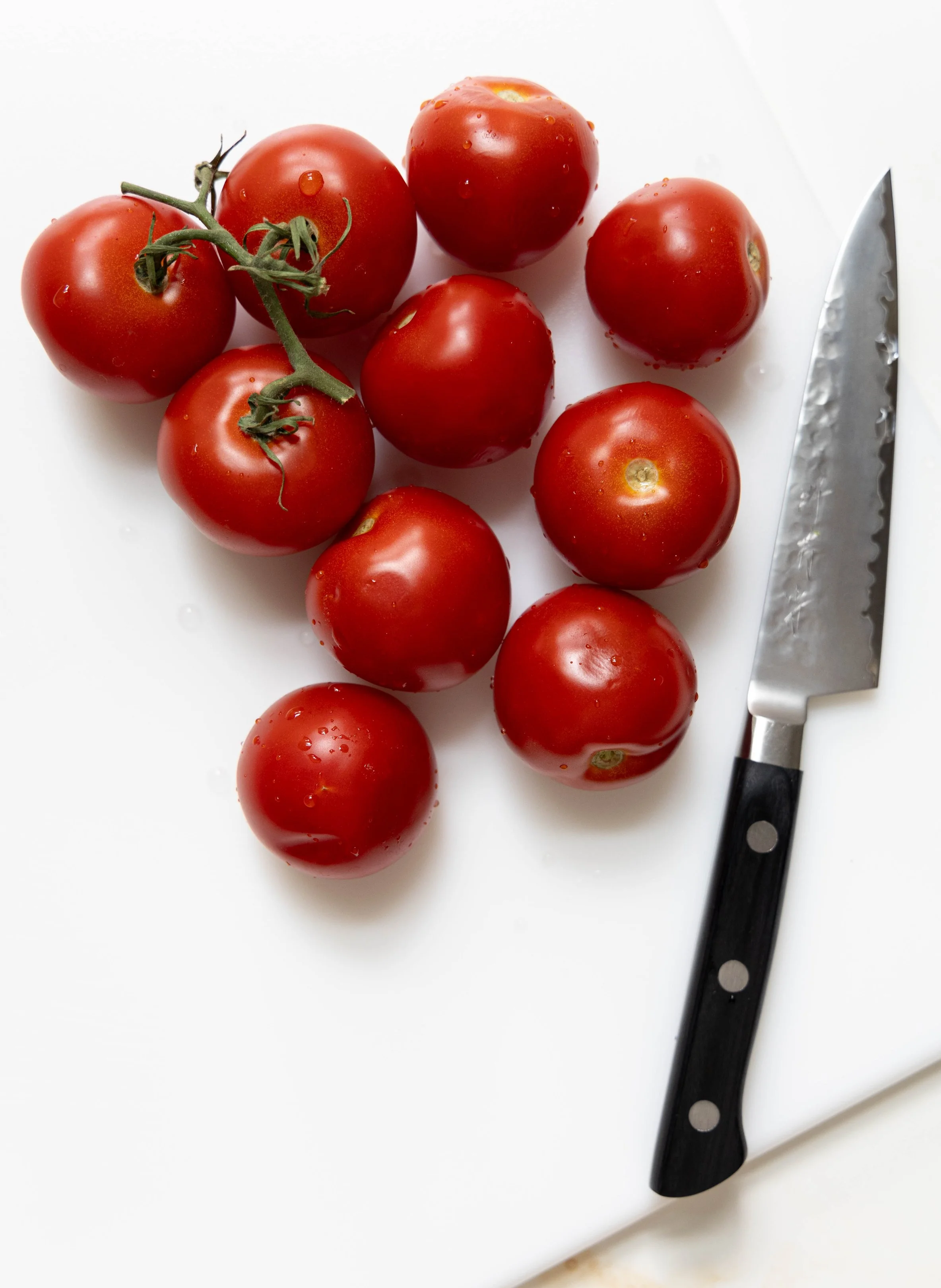
Key Ingredients
Campari tomatoes — Sweet and juicy, they form the base of the sauce; a mix of seeded and unseeded pieces keeps it flavorful without getting watery.
Molasses — The unexpected ingredient that gives the sauce its hearty, distinctive depth of flavor.
Balsamic vinegar glaze — Adds concentrated sweetness and tang without thinning out the sauce.
Fresh basil and garlic — Classic bruschetta aromatics that round out the marinade.
Good extra-virgin olive oil — Since the sauce is uncooked, a good-quality oil really comes through.
Chili flakes — An optional finishing touch for a bit of heat.
Bruschetta Pasta
Prep time: 10 minutes (plus 2–3 hours marinating) | Cook time: 15 minutes | Serves 4–6
Ingredients:
1 pound Campari tomatoes
3 tablespoons fresh basil, chopped, plus more for serving
2 tablespoons good extra-virgin olive oil
2 teaspoons balsamic vinegar glaze
2 teaspoons molasses
2 garlic cloves, minced
½ teaspoon kosher salt
¼ teaspoon black pepper
1 pound spaghetti
½ cup Parmesan, freshly grated, for serving
Chili flakes, optional
Instructions:
Sauce
Cut the tomatoes in half. Remove and discard the seeds from half of the tomatoes, then dice those seeded tomatoes and place them in a bowl.
Dice the remaining (unseeded) tomatoes and add them to the bowl. Stir in the basil, olive oil, balsamic glaze, molasses, garlic, salt, and pepper.
Let the mixture stand at room temperature for 2–3 hours, mixing every hour or so to marinate evenly.
Assembly
Once ready to eat, bring a large, salted pot of water to a boil. Add the spaghetti and cook until al dente. Drain the pasta, then add it to the bruschetta sauce and toss to combine.
Top with Parmesan, the remaining basil, and chili flakes, if using.
Tips for Success
Don't rush the marinating time — the full 2–3 hours is what allows the molasses and balsamic to fully meld with the tomatoes.
Mixing seeded and unseeded tomatoes keeps the sauce flavorful without making it too watery.
Stir the sauce every hour while it marinates so the flavors distribute evenly.
Since the sauce isn't cooked, use good-quality olive oil and balsamic glaze — they really come through in the final dish.
Save any extra sauce; it's just as good spooned over toast, pizza, or a sandwich.
Ways to Serve It
As written, with extra basil and parmesan — Simple and fresh.
With a kick of heat — Add the chili flakes for a spicier finish.
On toast — Spoon the leftover sauce over grilled or toasted bread.
On pizza — Use it as a fresh, uncooked topping after baking.
On a sandwich — Spread it on a turkey or chicken sandwich for a burst of bruschetta flavor.
Storage
The sauce keeps in an airtight container in the refrigerator for up to 3 days — the flavors continue to develop as it sits. The assembled pasta is best enjoyed fresh, though leftovers keep refrigerated for up to 2 days; let it come closer to room temperature before serving for the best texture and flavor.
Swaps and Substitutions
Campari tomatoes: Cherry or grape tomatoes work well in their place.
Spaghetti: Any long pasta shape, like linguine or bucatini, works here.
Molasses: A touch of honey or brown sugar can stand in, though the flavor will be slightly different.
Balsamic vinegar glaze: Regular balsamic vinegar, reduced slightly, can be substituted.
Parmesan: Pecorino Romano makes a good, saltier substitute.